
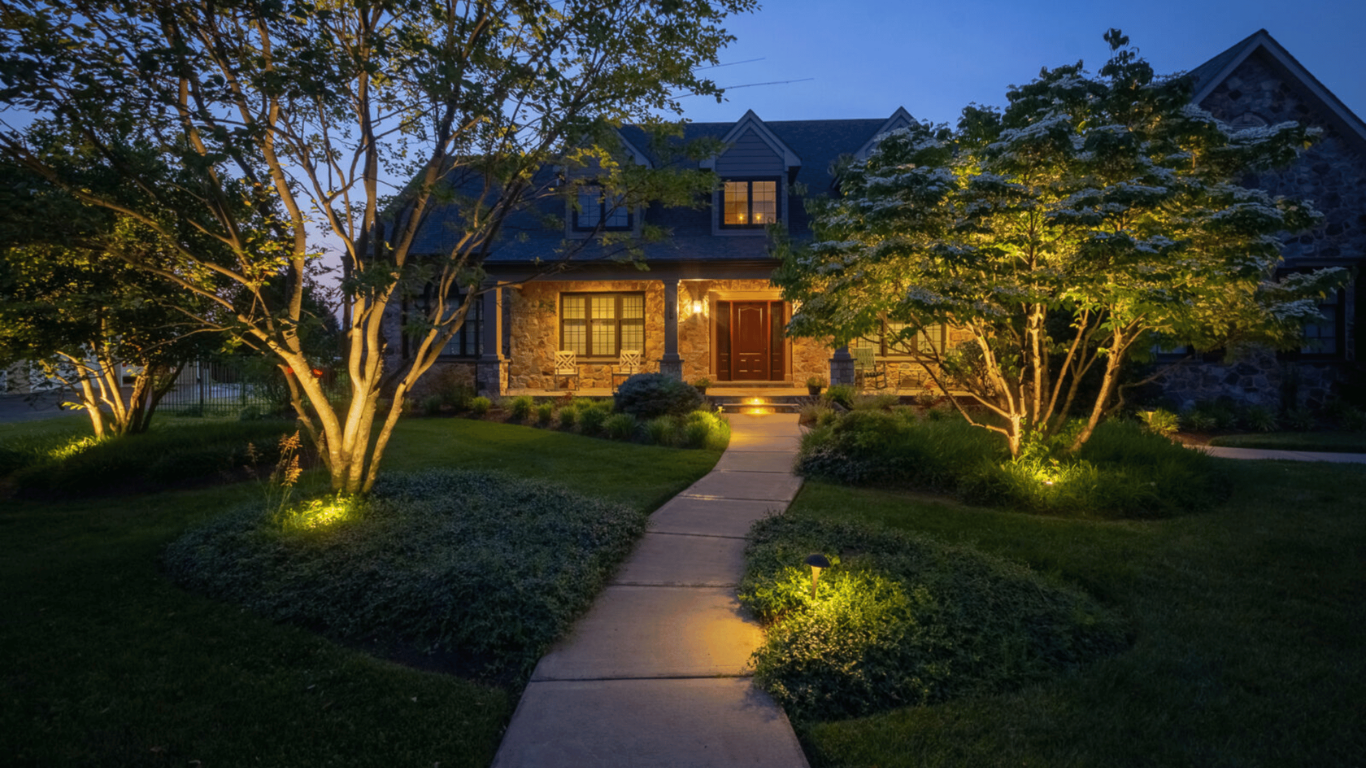
Residential Landscape Lighting Ideas to Boost Curb Appeal and Nighttime Safety
There’s something instantly welcoming about a home that looks great after sunset. The right residential landscape lighting doesn’t just make your yard prettier. It also makes walkways safer, highlights features you’re proud of, and helps your property feel more secure.
If you’ve been thinking about updating your exterior, a lighting refresh is one of the most noticeable curb-appeal upgrades you can make without changing your landscaping. Below are practical, real-world ideas you can mix and match, plus guidance on where lighting makes the biggest difference.
Start with a simple residential landscape lighting plan.
It is best to put yourself in your guest’s shoes as they arrive at night before purchasing fixtures. How does he move around? Where does he stop? What would he see first? Planning ensures the lights are not scattered or too glaring.
Outdoor lighting should be in tiers of three, which are as follows:
- Path/task lighting to help you move around safely (paths, stairs, gates, edges of driveway)
- Decorative lighting on important parts (trees, stone work, architectural elements)
- Ambient lighting to softly fill in darker areas (patios, seating zones)
When these layers work together, you get a yard that feels polished and comfortable, not like a parking lot.
Lighting ideas that instantly boost curb appeal
Curb appeal at night is all about guiding the eye. You don’t need to light everything; you just need to light the right things.
1) Highlight the front entry (without glare)
Your front door should be the “anchor” of the nighttime view. Use a combination of soft downlighting and subtle accents around nearby landscaping. The goal is to make the entry easy to find and inviting, not blinding.
Possible extras include shrubs lining the area, an ornamental tree, or a feature such as a pillar or an impressive stone facade.
2) Uplight mature trees for a high-end look
One or two established trees provide your property with its most valuable nighttime visual asset. A few uplights add visual interest by creating three-dimensional effects. The lights reveal both the trunk’s texture and the shape of the tree’s canopy.
Tip: Fewer, carefully aimed fixtures usually look better than lots of lights pointed everywhere.
3) Wash a textured wall or stone feature
Stone, brick, and decorative concrete look amazing with “wall washing,” which evenly spreads light across the surface. This is one of the easiest ways to make the front of the home feel more dimensional at night.
4) Add subtle driveway definition
It is not necessary for the driveway lighting to be excessively bright. Consistently providing soft lighting along the driveway edges will help guide people. Such lighting will also make the area look neat and well-organized.
5) Make landscaping beds pop selectively
Instead of lighting every bed, only a few key planting areas are lit. This keeps the yard from looking too bright or cluttered.
- Focus on a bed near the entrance to make it feel more welcoming.
- Light a curved bed to guide the eye toward the house.
- Highlight one focal plant with a strong shape, like agave, shaped boxwood, or ornamental grass.
Residential landscape lighting for nighttime safety
Beauty is great, but safety is where outdoor lighting really pays off day to day. A well-lit property helps prevent trips, slips, and awkward “where do I go?” moments for family and visitors.
Light these areas first.
If you’re planning, begin with the places that get the most traffic:
- Paths from the driveway to the front door
- Stairs and elevations (front stoop, garden stairs, retaining walls)
- Places where people transport things from the driveway to the front door
- Side yards and gates, particularly if you have to drag your garbage cans out at night
- Outdoor furniture and patios where you need visual acuity without excessive illumination
Steps can be effectively illuminated with carefully placed path lights or downlights. Shadows should not obscure the step’s edge.
Reduce shadows and “black pockets.”
Safety concerns tend to result from contrasts: a bright spot adjacent to an extremely dark area. Correct spacing of fixtures and lowering light intensity are more effective than simply installing higher-wattage fixtures.
Smart design choices: brightness, color, and fixture placement
An outdoor lighting scheme works best when it seems effortless. These are some of the features that differentiate professionally designed lighting from amateur work.
Choose a warm color temperature.
Warm white lighting generally feels more welcoming and complements most home exteriors and plants. It’s also easier on the eyes than cooler, bluish light.
Aim carefully to avoid glare.
People who use landscape lighting systems most often report glare as their main problem. You need to test your light fixtures from the sidewalk and driveway because direct light indicates excessive fixture exposure or an improper height adjustment. The correct positioning method displays the lighting effect while keeping the lighting fixture hidden.
Use lighting to create depth.
Depth is what makes a yard look “designed.” Instead of lighting only the house, add a few lights in the foreground (near the walkway) and a few in the mid-ground (trees or beds). This layered look is subtle but powerful.
Maintenance matters: keep lighting and irrigation working together
Being an outdoor installation, landscape lighting requires periodic care, particularly after a storm, seasonal changes, or landscaping. Lights might be knocked off their mounting spots, and the plant life may grow into the light beam.
It’s also important that lighting and watering systems don’t fight each other. Sprinkler spray hitting fixtures can leave mineral spots on lenses and gradually reduce light output. If you’re already investing in your outdoor space, pairing lighting upkeep with Residential Irrigation Maintenance can help keep the whole landscape performing the way it should.
The same idea applies to larger entities, such as companies: regular Commercial Irrigation Maintenance protects the health and appearance of plants, whereas Commercial Landscape Lighting provides a safe, professionally lit exterior at night.
Actionable checklist: quick wins you can do this month
The following suggestion offers an easy way to achieve a visible improvement without complex procedures.
- You should conduct a nighttime property inspection using a notebook to record all dark areas, including walkways, staircases, and entrances.
- Choose between one and two main points of interest from the options of a tree, a textured wall, and the front entry landscaping.
- The design process must start with safety zones for all steps, walkway turns, and side gates.
- The lighting system should maintain moderate brightness until additional fixtures are installed to eliminate remaining dark areas.
- Schedule a seasonal check to re-aim fixtures and clear plants from beams.
This approach keeps the project manageable and prevents the common “too much light everywhere” look.
When residential landscape lighting is done well, your home feels more inviting, your yard looks more polished, and moving around outside at night becomes easier and safer. Focus on lighting the areas people use, highlight a few features you love, and keep the system maintained so it stays crisp and reliable season after season. Contact us today to learn how we can bring your outdoor vision to life.
To stay current with us, please follow our Facebook and LinkedIn pages.
