
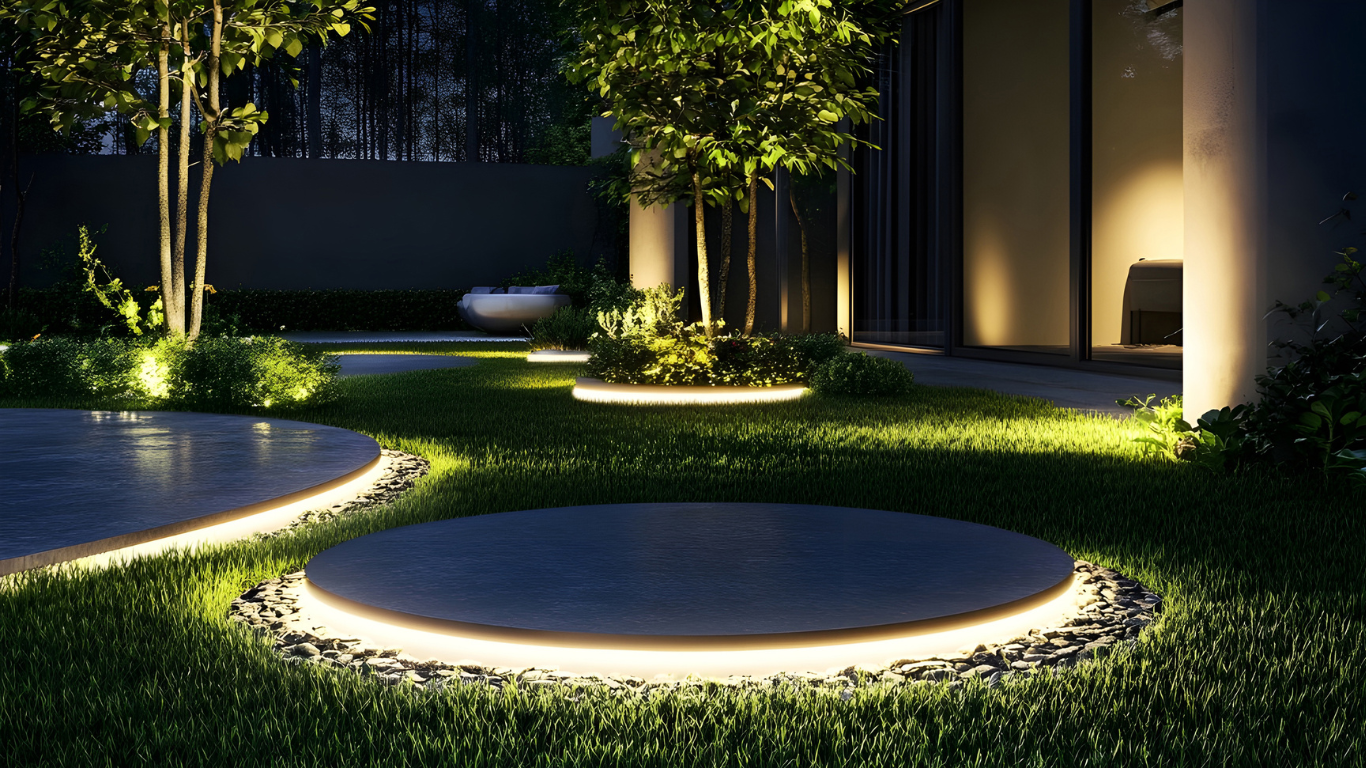
LED and Halogen Landscape Lighting Compared to Help You Choose the Best Option for Your Home
Choosing landscape lighting starts with a clear goal. You want your home to shine at night and feel safer as you walk from the driveway to the front door. Deciding between LED and halogen landscape lighting can be tricky. The best choice depends on how you use your yard, what you want to light, and how much maintenance you can handle.
Here’s a simple, step-by-step guide to compare LEDs and halogens. It will help you plan your layout and make a confident choice. Irrigation Specialists USA can handle your design and installation. They offer Residential and Commercial Landscape Lighting services tailored for your property.
LED vs halogen landscape lighting: what’s the real difference?
At a high level, both LED and halogen fixtures can create beautiful outdoor lighting. The difference is how they produce light, how long they last, and what they cost to run over time.
Halogen bulbs produce light through a process called filament heating. The main advantage of these lights is their warm appearance and bright light, although they get very hot and don’t last long.
LED lamps create light electronically. They’re far more energy-efficient, run cooler, and usually last much longer, often making them the more “set it and forget it” choice.
Here’s the practical impact for homeowners:
- Energy use: LEDs use less energy than comparable halogen bulbs when producing the same amount of light.
- Heat: Halogens run hot, which can be a concern around mulch, dry leaves, or tight fixture housings.
- Bulb life: LEDs generally last much longer, meaning fewer ladder trips and fewer replacements.
- Light quality: Halogen is naturally warm; LED quality depends on the lamp’s color temperature and optics.
How to choose the best option for your home (step-by-step)
If you’re trying to decide quickly, don’t start with the bulb type. Start with your goals. Then let the lighting type support the plan.
Step 1: List what you want your lighting to do
Most landscape lighting projects fall into a few categories:
- Safety: steps, walkways, driveways, and changes in elevation
- Security: elimination of shadows near entrances and side yards
- Curb appeal: highlighting architectural features and landscaping
- Outdoor living: patios, seating areas, and outdoor kitchens
If you want “always on” or long nightly run times, LED is the better choice. It keeps operating costs low. If you light up events occasionally, the cost difference isn’t a big deal. So, other factors, like the warmth you like, become more important.
Step 2: Walk your property at night and mark key zones
Take a flashlight and conduct a quick tour at night. Observe those areas where you have to pause because it gets darker. Mark:
- Main entry path and steps
- Driveway edges or turnarounds
- House numbers and front door
- Any tripping hazards (tree roots, uneven pavers)
- Focal points (a specimen tree, fountain, textured wall)
This is where a professional Residential Landscape Lighting plan can really help, good lighting is as much about placement and beam spread as it is about the bulb.
Step 3: Decide how much maintenance you’re willing to do
This is often the deciding factor. Halogen systems tend to require more frequent bulb replacements. LEDs typically reduce that ongoing upkeep.
If you already keep up with seasonal tasks like
Residential Irrigation Maintenance, you may not mind occasional bulb swaps. But if your goal is minimal yard maintenance, LED is usually the more convenient long-term pick.
Step 4: Match the “look” you want (warmth, brightness, and beam)
People often say halogen “looks better,” but what they’re really noticing is warmth and smooth dimming. You can get a similarly inviting look with LED by paying attention to:
- Color temperature: Look for warm options (often in the warm-white range) if you want that classic glow.
- Beam angle: Narrow beams for tall trees/columns; wider beams for walls and broader plantings.
- Glare control: The right shielding and aiming prevent harsh hot spots, especially important with brighter LEDs.
In short, LEDs may have great appearance, yet they require careful choice and aiming. Halogens might look simpler, but think about their energy use and how often you need to replace them.
Step 5: Consider operating cost and long-term value
LEDs often cost more upfront, but they usually save money on running and maintenance costs. Halogens might seem cheaper initially. However, they use more energy and have a shorter bulb life. This will also raise your expenses if you leave the lights on every night. This is even more important to consider if you are in charge of a big property or company. For customers using Commercial Landscape Lighting
LEDs are popular because they lower ongoing costs and keep properties well-lit.
Common problems (and how each lighting type handles them)
Landscape lighting issues usually show up after the “wow” moment fades, when you live with the system day to day. Here are a few pain points to think through before you commit.
Problem: “My yard has dark spots and harsh glare at the same time.”
Solution: This is almost always a layout and aiming issue. If your LEDs are either too bright or not correctly aimed, they can be perceived as harsh, but on the other hand, you have a lot of flexibility regarding optics and output. Although halogens are considered to produce soft light, glare can still occur.
A good fix is to use more fixtures at lower intensity rather than a few extremely bright points. That approach tends to look more natural and reduces shadows.
Problem: “Bulbs keep burning out, and I’m tired of replacing them.”
Solution: This is where LED usually wins. The lifespan of halogen lights is typically shorter than that of LED lights; thus, changing halogen light bulbs often results in high maintenance and repair costs.
For properties where upkeep is already a priority, like sites that also need Commercial Irrigation Maintenance, reducing lighting maintenance can simplify scheduling and reduce interruptions.
Problem: “I’m worried about heat near mulch and plants.”
Solution: LEDs run cooler than halogens, which can be helpful in tight spaces or near organic materials. Regardless of type, fixtures should be installed correctly with proper clearance and placement.
Actionable checklist: making a confident final decision
Are you still undecided? Try out this simple checklist to help you decide according to your practical considerations:
- Choose LED if you want lower energy use, longer lamp life, and less routine maintenance.
- Choose a halogen if you prioritize a traditional warm look and don’t mind more frequent bulb replacements.
- For nightly use (dusk-to-dawn or long evening hours), LED is typically the practical choice.
- For short, occasional use, halogen can still be a workable option if you like the look and are willing to accept the upkeep.
- If you’re lighting multiple zones (front entry, sides, backyard living areas), focus on a cohesive design first, then select lamp type.
And one more tip that’s easy to overlook: your landscape changes over time. Plants grow, sightlines shift, and mulch beds get refreshed. Planning for small adjustments, just like you would with Residential Irrigation Maintenance, helps your lighting stay effective and attractive year after year.
When it makes sense to bring in a professional
If you are confused about the positioning of your fixtures or the angles of your beams, professional assistance from Irrigation Specialists can prevent time-wasting and frustration. The best lighting system must be deliberate, not just “spotted,” and guide without making your yard resemble a parking lot.
Irrigation Specialists supports both homeowners and businesses with Residential Landscape Lighting and Commercial Landscape Lighting, as well as Residential and Commercial Irrigation Maintenance to keep outdoor systems functioning properly.
If you are confused about the positioning of your fixtures or the angles of your beams, professional assistance can prevent wasting time and frustration. The best lighting system must be deliberate, not just “spotted,” and guide without making your yard resemble a parking lot.
To stay current with us, please follow our Facebook and LinkedIn pages.
